Many business owners look at their monthly IT expenses as a necessary evil, or even a sunk cost, like an electric bill or an office lease. You pay for it because you have to, not because it promises to help you win over new clients or unlock new opportunities. This is the mindset that’s going to get you left in the dust by your competitors, and if you’re still thinking about IT this way, you need to change your mind, and fast.
Apex Technology Blog
A small business is a complex machine, even in its simplest form. One cog that’s not operating at the appropriate capacity can create operational problems that lead to bigger, more expensive issues later down the road. While businesses worry about the economy and ensuing financial issues, the reality is that your business is far more likely to fail due to operational inefficiencies.
Do you look at your technology as a cost center to be managed, or as a springboard for new revenue? If you’ve been following us for a while, you know we like to think of it as the latter. Small businesses spend much of their IT budget just to keep the lights on, stuck in an endless cycle of “surviving” rather than “thriving.” But with a virtual CIO, or vCIO, your business can reframe the conversation surrounding technology and look at it as an endless realm of opportunity rather than an endless loop of costs.
As we move through 2026, smartphone app production has started to feature artificial intelligence. For IT leaders and service providers, these aren't just flashy consumer upgrades, they represent a fundamental change in how businesses interact with data, security, and connectivity. Here is a look at the most modern innovations currently hitting the market. Let’s take a look at them today.
Is your network infrastructure a Frankenstein’s monster of mismatched tools and quick fixes? This is what most small business IT looks like; companies adopt solutions without a thought as to how they are supposed to work together, and it ultimately ends up impacting operations. This creates tech debt, and not the monetary kind, that is hard to bounce back from without taking a serious look at your IT practices.
You’ve likely looked at your business’ technology bills and seen nothing but dollar signs leaving your bank account. For many, IT feels like a necessary evil or a cost center that only gets attention when something breaks. The hard truth is that many businesses fail to scale because their technology wasn't built for the growth they planned.
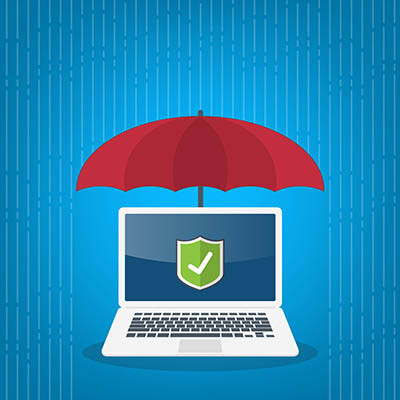
If you put yourself in the shoes of an insurance company, you might find yourself thinking twice about protecting someone who actively partakes in risky behavior. The same can be said for a business insurance provider, particularly when the behavior can easily be prevented through proactive and preventative measures. This is why many insurance providers are establishing minimum safeguards and compliance requirements, if only to protect their own skins.
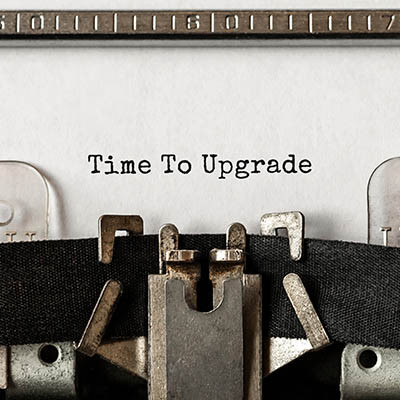
We’re sure at some point you’ve used the idiom, “If it ain’t broke, don’t fix it,” particularly in regards to your IT. While it might feel responsible and safe to stick to this motto as much as possible, there will come a time when it becomes dangerous to hold fast to it. In fact, business technology professionals might even call this motto irresponsible. Here’s why.
How often do you find yourself thinking about how new technology will impact your business’ bottom line? Chances are, you have considered implementing a new piece of technology or two, but you might get stuck on whether or not it will actually be worth the investment. This is where you consider the return on investment that technology will provide, or ROI. Here’s how you can make sure your technology is providing results and what you can do if it doesn’t get the results you’re looking for.
While data might be the new currency, your own business’ data might be a bit too messy to make full use of. You might be paying to store it and protect it, but you’re not doing as much with your data as you’d like. Here’s how businesses find themselves with these “data graveyards” and why it essentially functions like a debt rather than an asset.
Your business is growing. You're focused on your clients, your services, and your bottom line. The last thing you have time for is a technology headache. Yet, for many small and medium-sized businesses in Greensboro, frustrating IT issues are a daily reality… sluggish systems, cybersecurity worries, and unresponsive tech support can (and frequently do) bring productivity to a grinding halt.
What if we told you it doesn’t have to be this way?
For pediatric practices across North Carolina, technology should be a tool that enhances patient care, not a source of constant worry.
Yet, with the rise of telehealth, complex compliance regulations, and the ever-present threat of cyberattacks, managing IT can feel overwhelming. Many practice owners fear changing providers, opting to stick with the "devil they know."
Apex Technology is here to show you a better way.
Besides all of those people who are advocating for the scaling back or non-implementation of tools to save jobs, most people understand the benefit of automation when it makes sense. Not only do machines tend to do certain tasks more effectively, they never willingly take a day off. Unfortunately, for every task that needs to be completed less than half can be automated, and that number drops even further when you take into account everything a human does at their job. Today, there are very few jobs that can be fully automated; even as AI has begun to be used more for business. This week, we wanted to discuss why automation may not be the answer you are looking for and why training humans holds a lot of value.
Happy Valentine’s Day! Today is a day to celebrate love, romance, and every butterfly that has ever fluttered in a stomach. However, the greatest loves can bring the greatest sorrow… particularly when the time comes to say goodbye.
Take Windows 10, for instance. PC users have loved the OS for a decade, but in a few short months, it will no longer be a good relationship for anyone—particularly business users—to maintain.
Your business needs software, along with the various integrations it allows for to keep your operations going. A little planning goes a long way, especially if you want to get the best return on your investment. Today, we want to look at how you can find the right mix of software for your business without breaking the bank or experiencing the dreaded “tech sprawl.”
Many market analysts and industry experts foresee an increase in the cost of hardware. We recommend that you take matters into your own hands to dodge the price hike and purchase your new IT now before it costs you more to do so. The implementation of any proposed tariffs could impact the market as early as February 2025, so we wanted to discuss what you should consider when purchasing new hardware today.
There is a concept known as the iron triangle that provides a simple framework for project management by outlining the balance between your costs, your available time, and the desired quality of your outcome.
Traditionally, the iron triangle helps illustrate how these factors impact each other. Instead, we wanted to take advantage of the principles of the triangle to explore how beneficial it can be to outsource IT services.
The big thing in business computing is AI, or artificial intelligence, and businesses are implementing it to solve a lot of repetitive problems that free up their employees to serve other roles. One such area is for IT support. But is it worth it to chat with a robot when something as important as IT is on the line?
If you want your business to succeed, you need to take care of your employees, but businesses sometimes let this important task slip in the throes of the day-to-day. Deloitte estimates that around 8 out of every 10 wage workers show signs of burnout. So the question then becomes… What are you doing about it?