


Clutter accumulates everywhere—the household junk drawer, an employee’s car, and yes, even your business’ network. In your business network, this clutter is called “digital cruft” and can lead to some pretty serious problems if you aren’t careful.

Blog
Clutter accumulates everywhere—the household junk drawer, an employee’s car, and yes, even your business’ network. In your business network, this clutter is called “digital cruft” and can lead to some pretty serious problems if you aren’t careful.

Adopting smart office technology—from connected lighting and thermostats to sophisticated monitoring sensors—can transform your workspace, offering efficiency and a modern aesthetic. Yet, as IT experts, we must guide you past the shiny facade to confront a critical reality: every new smart device is a potential gateway for cyber threats.
You should not have to sacrifice security for the sake of being "high-tech." However, implementing these solutions without a robust security strategy is a risky gamble.

Imagine a bustling afternoon on King Street. Your business is thriving, customers are happy, and the historic charm of Charlotte feels like a protective bubble. Digitally, however, that bubble doesn't exist.
Cybercriminals aren't deterred by cobblestone streets; they see your successful business as a treasure chest waiting to be plundered. It's not a matter of if they’ll try, but when.
Despite the immense productivity and convenience that come from using a smartphone, it’s important to remember that these devices are miniature computers in our pockets. As such, they are just as susceptible to threats as a computer or laptop. According to the National Security Agency, powering down your device is one of the most effective ways to protect your smartphone from various threats. Here’s why.
It would seem that the people responsible for the recent heist at the Louvre, which netted over $101 million in jewelry, may have used a more complicated plan than strictly necessary. According to a French publication, the famous museum has a long history of cybersecurity mistakes and faux pas… many of which, given the museum’s fame, are truly shocking.
Let’s go over what we know about the Louvre’s protections over the years, and what they suggest about the current state of things. We’ll probably learn a thing or two by doing so.

An old fable says that a frog placed in a pot of boiling water will jump out immediately, but if the water is warmed to boiling with the frog already in it, the frog won’t notice until it is already too late. Many businesses today act like that frog, overlooking minor tech issues that signal a growing problem until the damage is done.
Let’s see if we can identify some of these issues to help keep you out of hot water.

What was the scariest Halloween costume you saw last week? Chances are we know something scarier—the cyberthreats that want to take your business down. Let’s go over some of the most common threats to your business’ future and what your business can do about them.

It's a familiar challenge for businesses: how do you build customer loyalty and a strong user experience while also making sure that their data is protected? Sustainable success depends on mastering this delicate balance. Instead of choosing one over the other, the goal is to optimize data protection without hindering your ability to engage customers and drive growth.
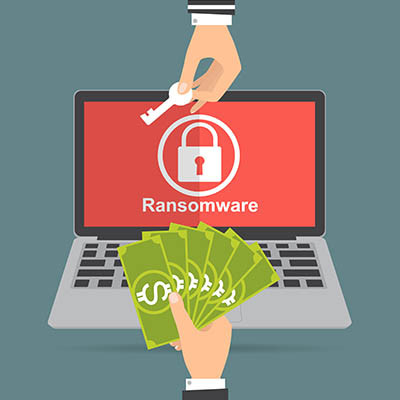
Here’s a challenge; go to any cybersecurity news website and see how far you can go before seeing an article about some new type of ransomware attack. It’s everywhere, and it’s scary, but that doesn’t mean your business has to cower in fear. With the right tools and resources at your disposal, you too can fight back against ransomware. Here’s how you can protect your business from ransomware and the threats it poses.
All businesses need a little IT assistance from time to time, whether it’s for a simple hiccup some software or a full-blown technology emergency. Cybercriminals will often pose as IT support in attempts to capture this low-hanging fruit. Your employees should know how to spot the following warning signs from a fraudulent tech support squad.

A successful business is a secure business. You probably have a good lock on the front door, maybe an alarm system, and secure cabinets for important documents. You do all of this to protect your business' physical assets from threats. So why wouldn't you do the same for your digital assets?
Just as you have physical security measures, your business also needs strong cybersecurity policies. They help create clear rules for employees to follow and a plan to fall back on if an incident occurs.
Tips are great as long as they actually work. Business owners need more technology tips than just about anything else, whether that is app-specific or general care of technology. We try to do our best to provide useful tips a couple of times a month, but this week we wanted to focus on what is probably the most important tip we can provide.
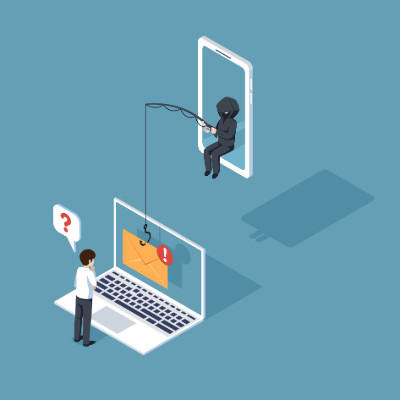
Cyberscams can be incredibly well-crafted and dangerous, and a significant portion of this danger stems from the scammer's ability to effectively utilize the psychological triggers that we all possess to some degree. Modern security training tends to focus on what signs we all need to keep an eye out for—and for good reason—but it does little to explore why modern scams are as effective as they are.
Let’s fix that by taking a moment to examine the tricks the scammers play so you can be that much more prepared to stop them by understanding how they work.
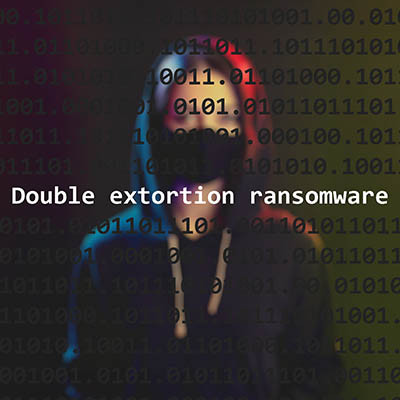
Ransomware has emerged as one of the most dangerous modern threats to businesses, and when you consider just what’s at stake with a ransomware infection, you’ll realize we’re not exaggerating. The worst variants of ransomware will attempt to extort you through any means necessary, and when you don’t give in so easily, they’ll pull out the big guns: double and triple extortion.

They say a man’s home is his castle. We’d contend that a more apt comparison is that someone’s business is more like their castle, realistically speaking.
As such, it is essential to ensure your security in every way possible. Much like a traditional castle was constructed to keep threats out, your business’ security needs to be approached in a similar way.
While we aren’t suggesting that you literally dig a moat or maintain cauldrons full of boiling oil, you do need to implement security measures that serve the same purpose for your business and its network.
We wanted to take a minute to talk a little bit about something we all cherish: hope. Hope is a powerful force and it constantly propels us forward and can brighten even the darkest days. We hope for good health, happy families, and definitely that winning lottery ticket.
Unfortunately, hope is a terrible cybersecurity strategy.

With so many devices now connecting to the Internet, decreasing your business’ threat surface area is more important than ever. Your threat surface area consists of any device that connects to your organization’s IT infrastructure, and if you’re not careful or forget a couple of oddball wearables, you could be looking at a data breach. Today, we want to go over how you can prevent that from happening.

Fairly recently, news circulated that a data breach had exposed 16 billion—yes, with a “b”—passwords for various logins, including social media accounts, virtual private networks, corporate tools, and more. Effectively, every online service imaginable was represented in this breach.
This is very bad… arguably unprecedented.
However, this impression is at best misleading. Let’s dig into the truth of the matter, while still acknowledging that there are some lessons to be learned.

When it comes to cybersecurity, businesses have a lot to keep tabs on—even a small business like yours. In fact, you wouldn’t believe just how much goes into cybersecurity and why your organization needs to make it a priority. Today, we want to convince you that cybersecurity is more than just a buzzword on the Internet; it’s a lifeline that will keep your company secure.

Third-party vendors are essential for modern businesses, as they deliver mission-critical resources and tools to the organizations that utilize them, including raw materials, software, and other services. Unfortunately, these vendors can also serve as direct lines into your business for a cyberattack to take advantage of for their own purposes.
Let’s talk a little about how you can still lean on your vendors without sacrificing your all-important security.









Contact us
Learn more about what Apex Technology can do for your business.
Contact Us
Apex Technology
18335 Old Statesville Rd. Suite K
Cornelius, North Carolina 28031